No More Starting From Scratch
🔒 To comply with my NDA, this case study excludes final UI screens and any confidential product details.
Overview
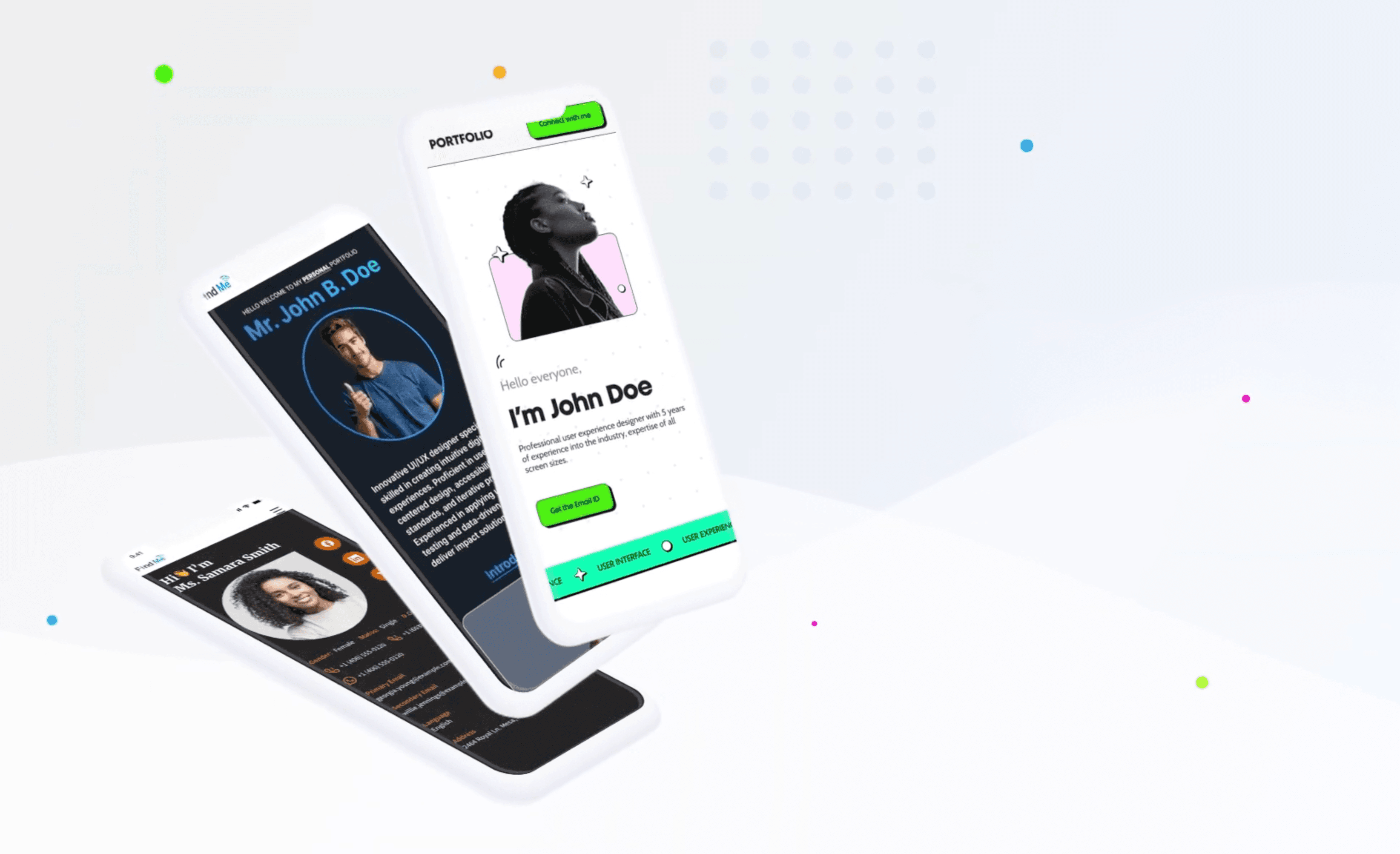
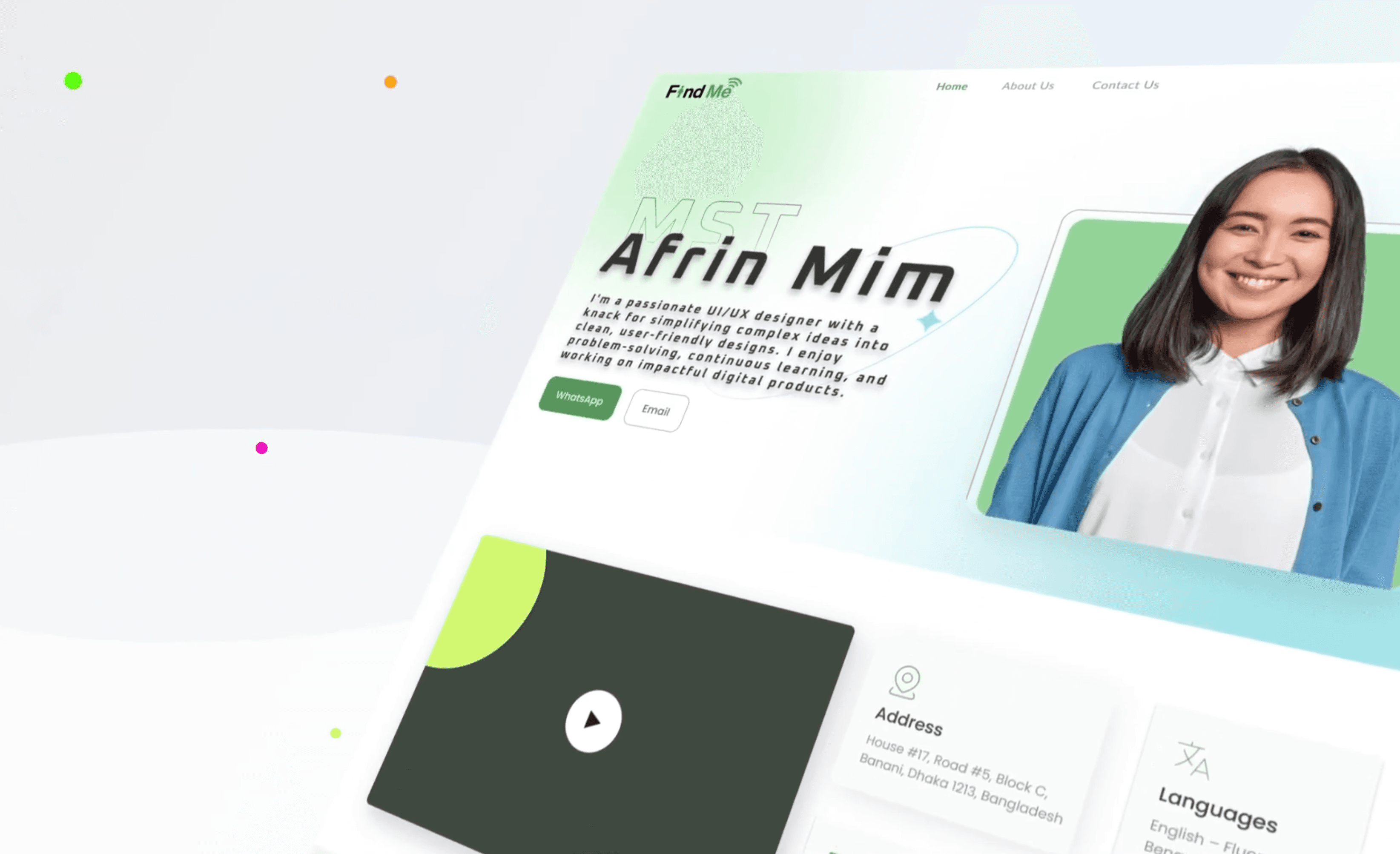
FindMe is a start-up platform designed to help people easily build beautiful, sharable portfolios. Users complete a brief form, and from there the system will select a portfolio template that they are able to easily customize. The platform also supports networking features like following, connecting, and browsing.
As a part of the UI/UX design team, I worked on creating portfolio templates as well as supporting UI elements that needed to function smoothly across devices.
The Challenge
Our challenge was to design portfolio templates that were flexible enough to support different types of users (e.g., personal portfolios, business profiles, creative portfolios) while maintaining consistency and clear content hierarchy with our design system.
My role was to collaborate with senior designers to design high-fidelity portfolio templates for both web and mobile, and support the creation of responsive components that would scale across breakpoints.
Goals
Build clean, flexible portfolio templates for several use cases
Maintain consistency across mobile and web designs
Support a design system that developers could easily implement
Iterate quickly based on frequent feedback
Process
To create these high-fidelity template designs, I put my focus on typography hierarchy, image / media layout options, clear structure for user information, and modular sections that could be rearranged based on user needs. I really put focus into consistency because these designs were built for both mobile and web.
Iterative Refinement Using Feedback
Throughout the interneship, me and my design team met regularly (often daily) with senior designers as well as the CEO to get design feedback and review progress. Based on our feedback, I worked to refine things like layout spacing, navigation clarity, component labeling, and interactions patterns within each template. This very iterative process helped to make sure the templates felt polished and intuitive.
Outcome
Delivered multiple polished portfolio templates for different user types
Designed responsive versions for both web and mobile
Contributed to a component library that supported consistent spacing, typography, and reusable modular sections
Improved clarity and usability through frequent feedback
Created prototypes to communicate the intended interactions
Reflection
This internship was one of my first real-world UX experiences, and it taught me a lot. I learned how to collaborate within a fast paced design team in a start-up environment. I learned how to take and apply feedback on a daily basis. I learned adapt static designs into responsive layouts. It also gave me confidence working on real product features, even in early development stages.
Overall, this experience really accelerated my growth as a designer. It showed me how to move from classroom projects to designing for real users. I worked with real teams with real constraints, and it was very eye opening. I learned skills that I'll be able to being to every team I join next.